Dido: Queen of Carthage
She climbed her own funeral pyre and fell on the sword her lover had left behind, cursing his people with her last breath. Centuries later, a Carthaginian named Hannibal marched on Rome.
Gods, Goddesses, and Ancient Legends
She climbed her own funeral pyre and fell on the sword her lover had left behind, cursing his people with her last breath. Centuries later, a Carthaginian named Hannibal marched on Rome.
Rome was not merely a city. It was a theological argument — a place the gods had chosen, protected, and made eternal. Understanding Roman mythology requires understanding what Romans believed their city was.
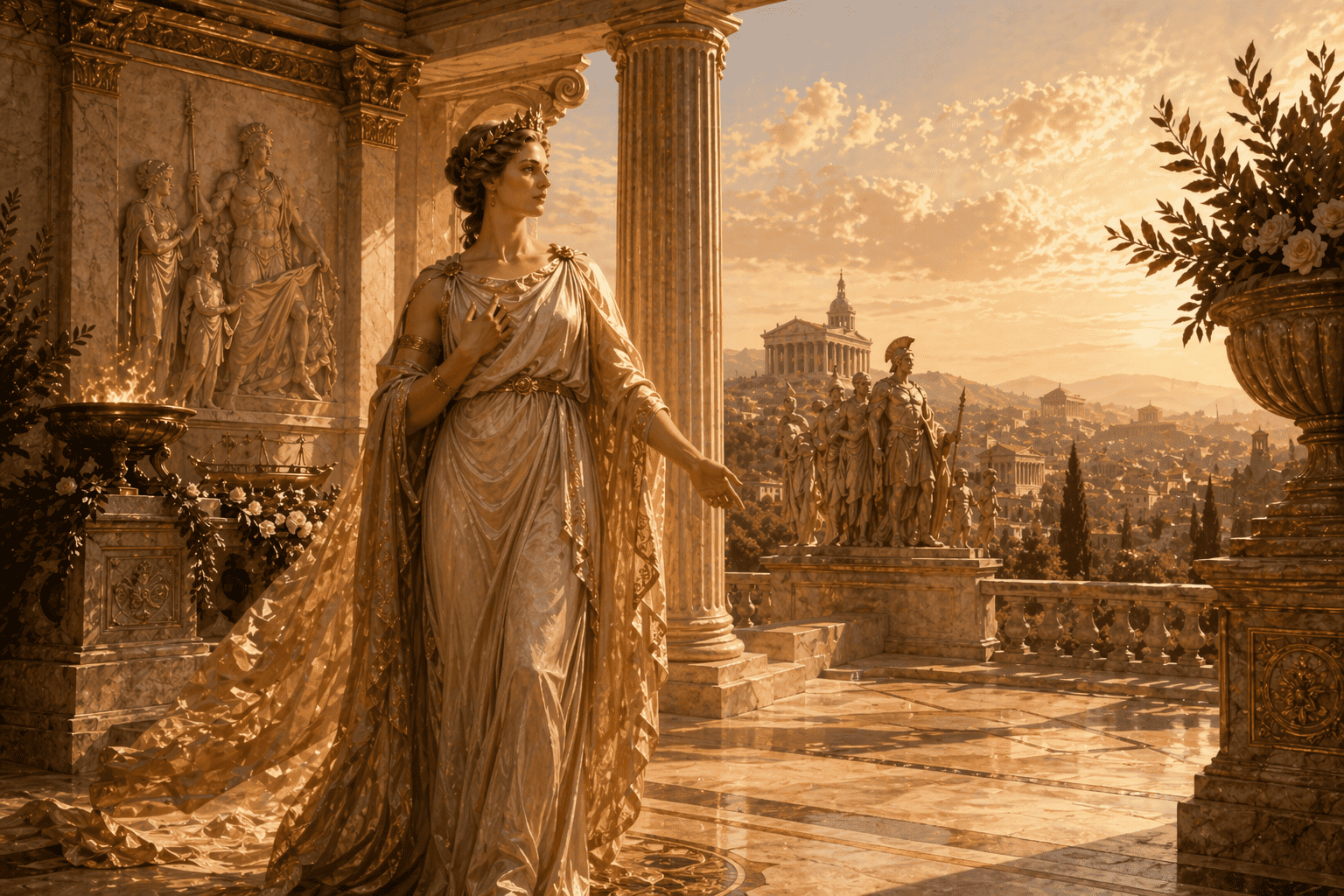
The night before the Battle of Pharsalus, Caesar vowed a temple to Venus Genetrix if she gave him victory. She did. He built it at the center of his forum, with a cult statue by the Greek sculptor Arcesilaus and a controversial golden statue of Cleopatra beside it.
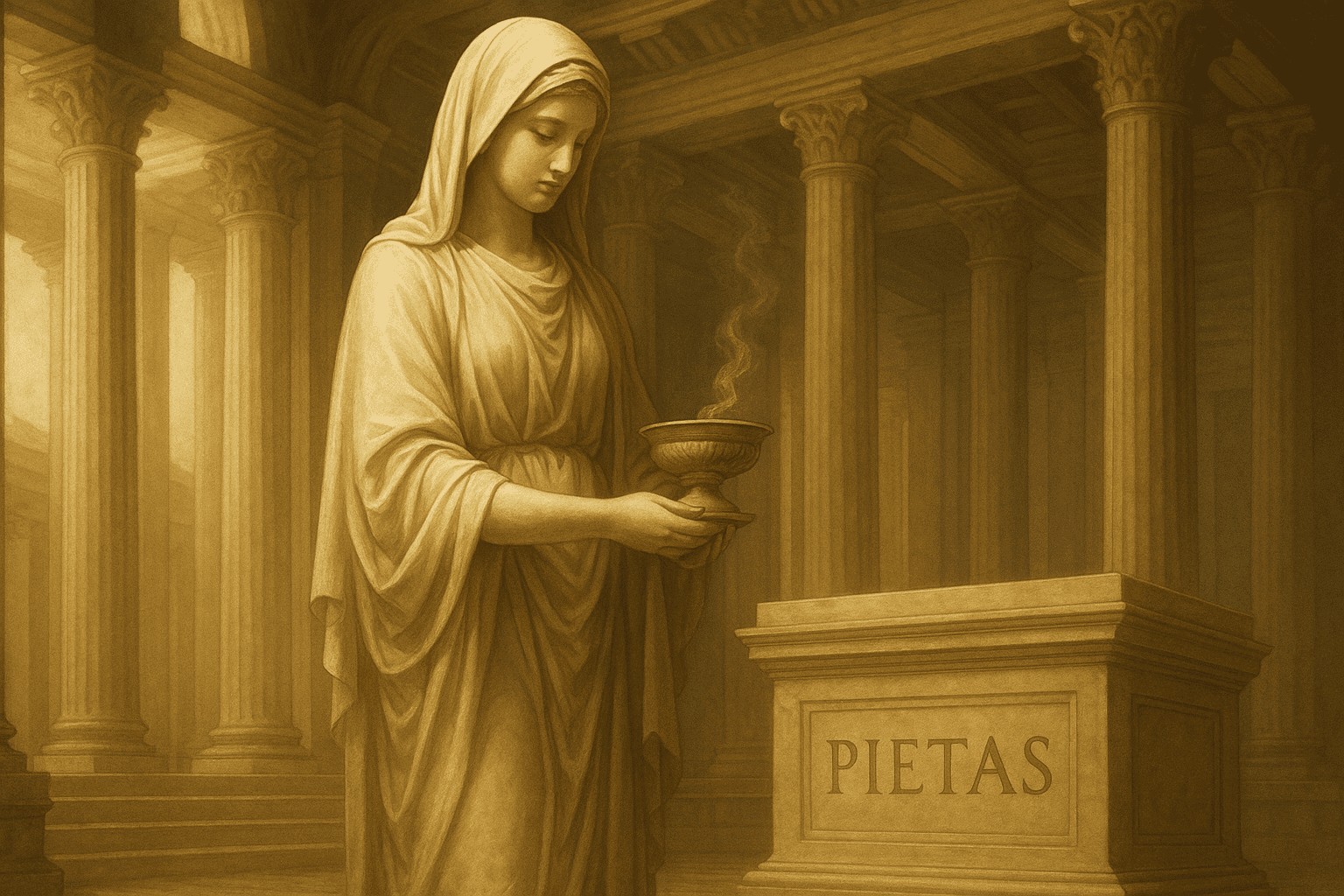
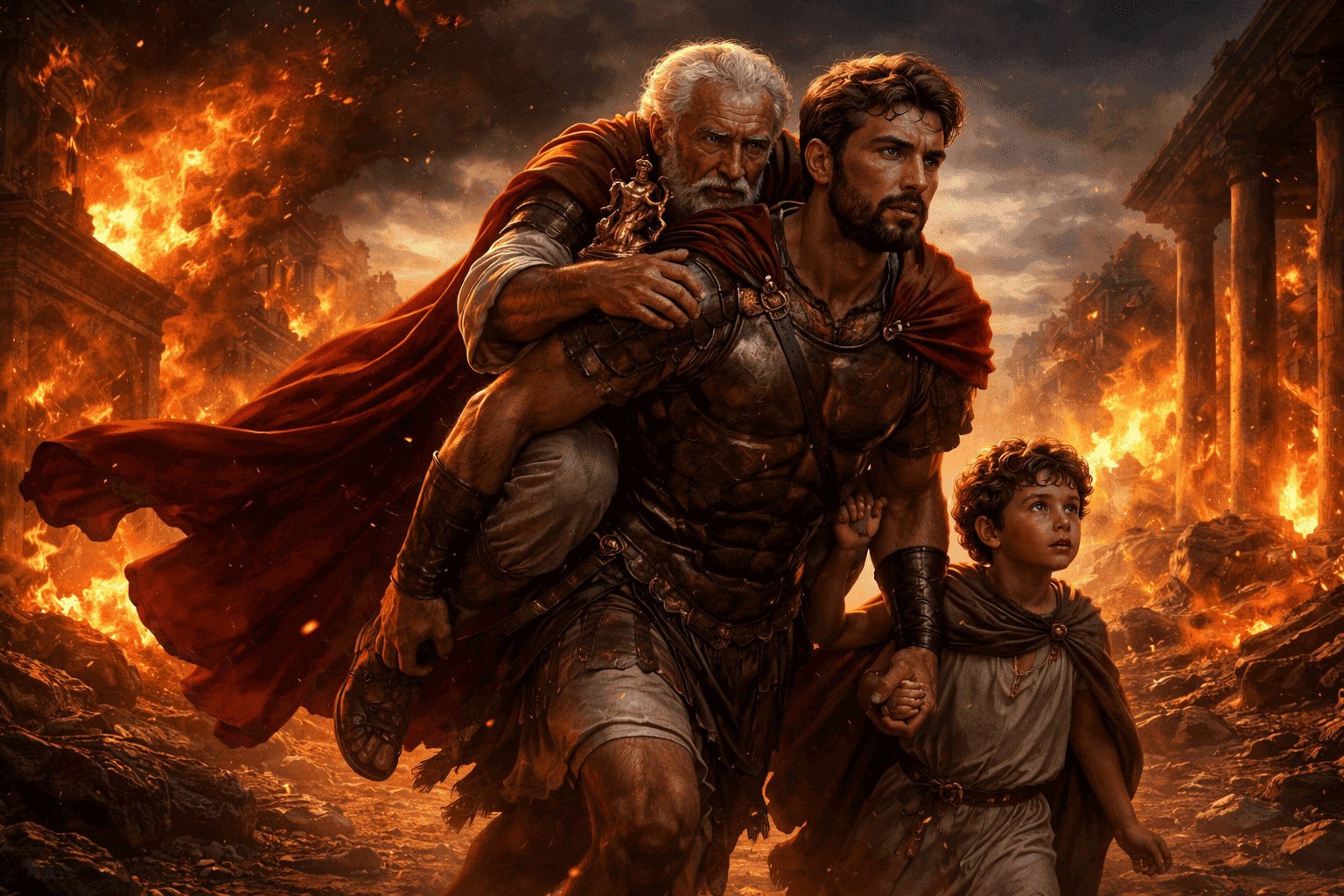
Pietas was the most Roman of virtues — not piety in the modern sense, but the whole network of obligations a person owed to the gods, to their family, and to the state. Aeneas carried his father out of Troy on his back. That was pietas.
Aeneas was the son of Venus and the man the Romans chose as their mythological ancestor. Not the strongest hero of the ancient world. Not the most dramatic. The one who carried his father out of a burning city and kept going.
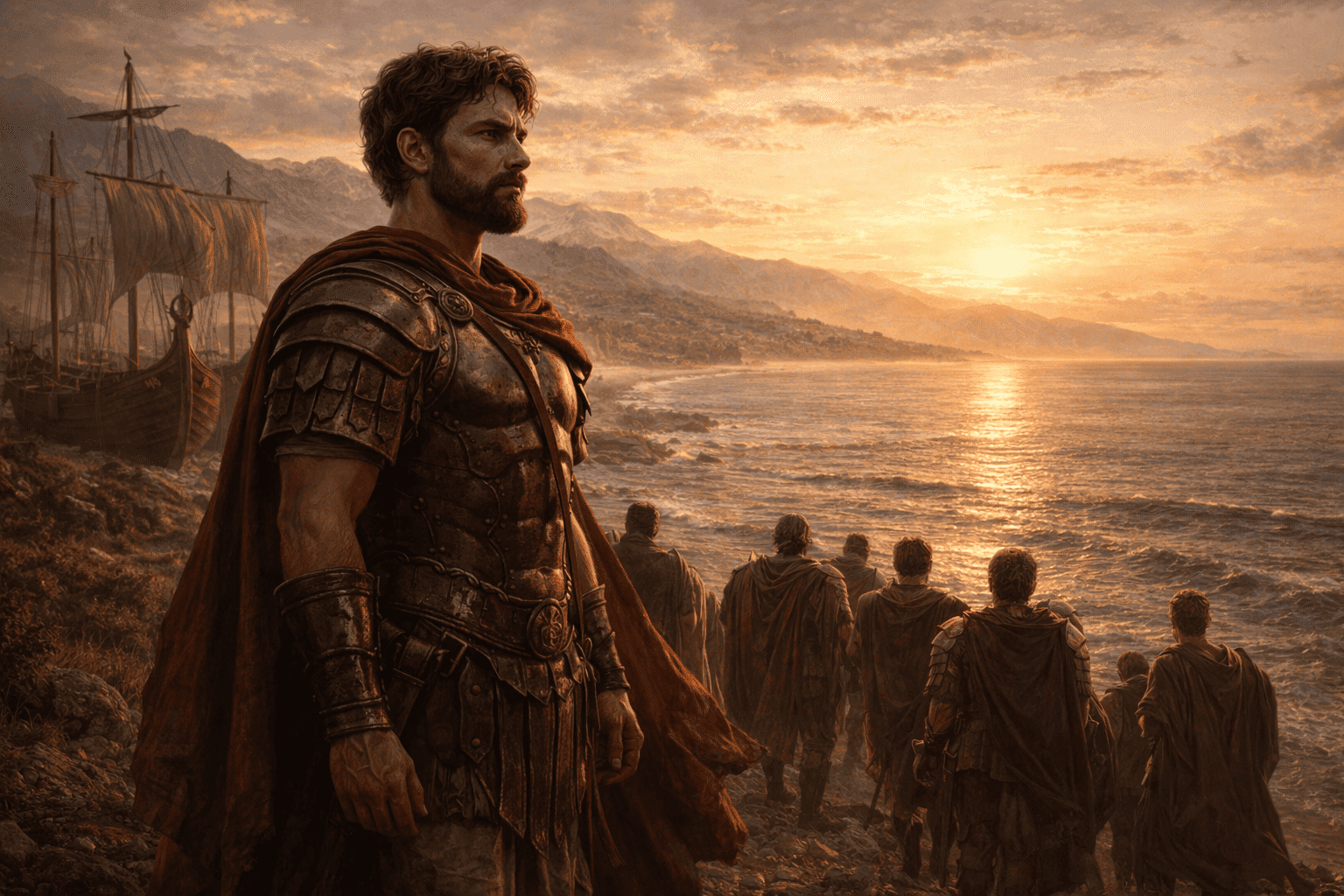
Troy fell in a single night. What came after took years — storms, gods, a queen who killed herself when he left, a descent into the underworld, and a war in Latium before a single Roman brick was laid. The journey was the point.
A golden apple, three goddesses, and one bad choice by a Trojan shepherd — the Judgment of Paris is the moment Roman mythology identifies as the origin of everything: the Trojan War, the fall of Troy, the voyage of Aeneas, and ultimately Rome itself.