Dido: Queen of Carthage
She climbed her own funeral pyre and fell on the sword her lover had left behind, cursing his people with her last breath. Centuries later, a Carthaginian named Hannibal marched on Rome.
Gods, Goddesses, and Ancient Legends
She climbed her own funeral pyre and fell on the sword her lover had left behind, cursing his people with her last breath. Centuries later, a Carthaginian named Hannibal marched on Rome.
The ancient world had two entirely different kinds of Cyclops: the divine smiths who forged Jupiter’s thunderbolts under Mount Etna, and the savage shepherd Polyphemus who ate Odysseus’s men. They share a name and a single eye. Almost nothing else.
Somnus and Mors were brothers — Sleep and Death. The Romans took that relationship seriously. Every night was a small death, every dawn a small resurrection, and Somnus presided over the threshold between them.
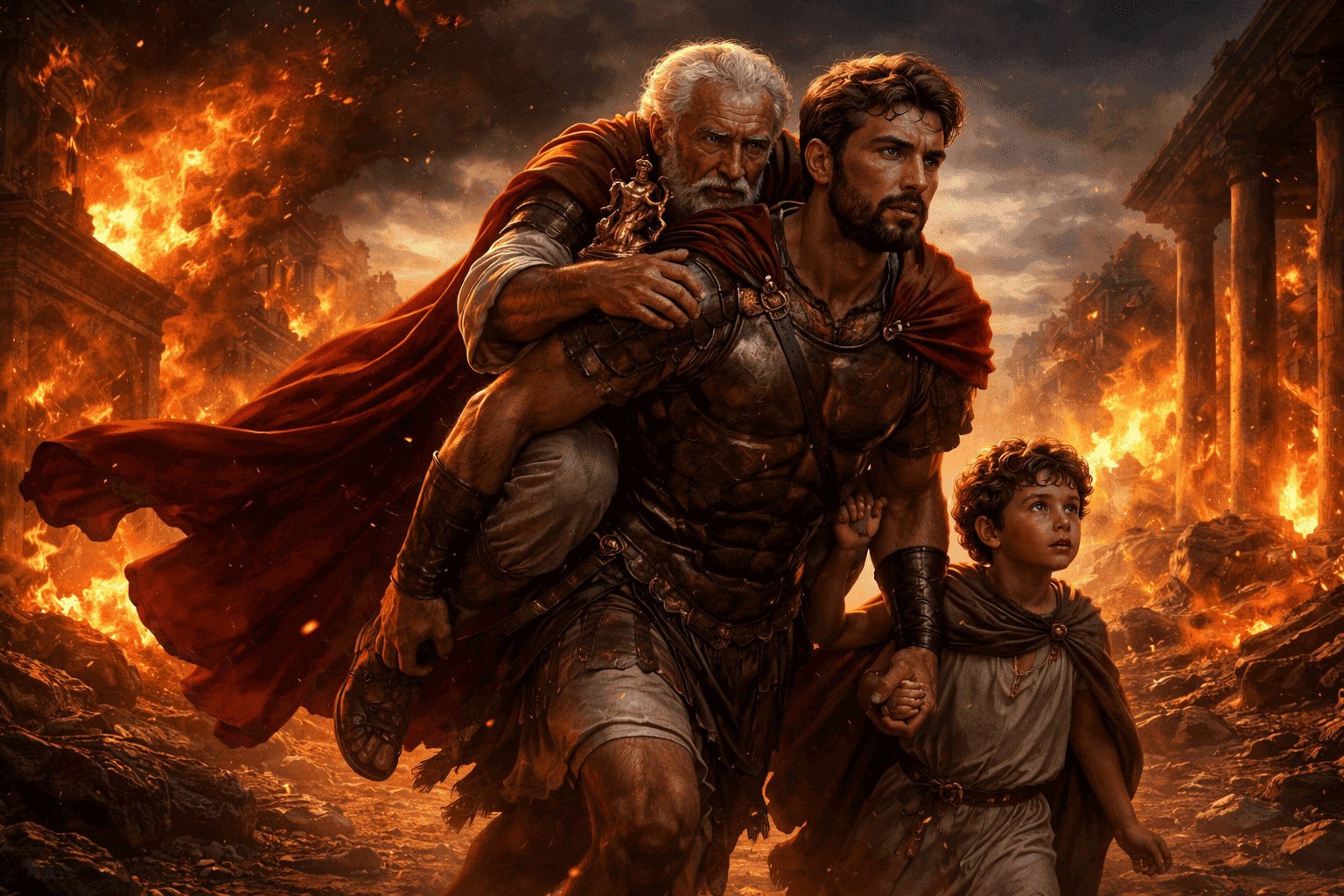
Pietas was the most Roman of virtues — not piety in the modern sense, but the whole network of obligations a person owed to the gods, to their family, and to the state. Aeneas carried his father out of Troy on his back. That was pietas.
Trivia’s name means “of the three ways” — the three roads that meet at a crossroads. The Romans left offerings there at night, not because crossroads were neutral ground, but because they weren’t.
Aeneas was the son of Venus and the man the Romans chose as their mythological ancestor. Not the strongest hero of the ancient world. Not the most dramatic. The one who carried his father out of a burning city and kept going.
Orpheus walked into the underworld with a lyre and talked his way past Cerberus, past the Furies, past Pluto himself. He got everything he asked for. Then he looked back.
Troy fell in a single night. What came after took years — storms, gods, a queen who killed herself when he left, a descent into the underworld, and a war in Latium before a single Roman brick was laid. The journey was the point.