Avernus: The Lake at the Edge of the World

Dark entrance to Avernus beside a volcanic underworld landscape with glowing lava, stone statues, and a fiery Roman archway.

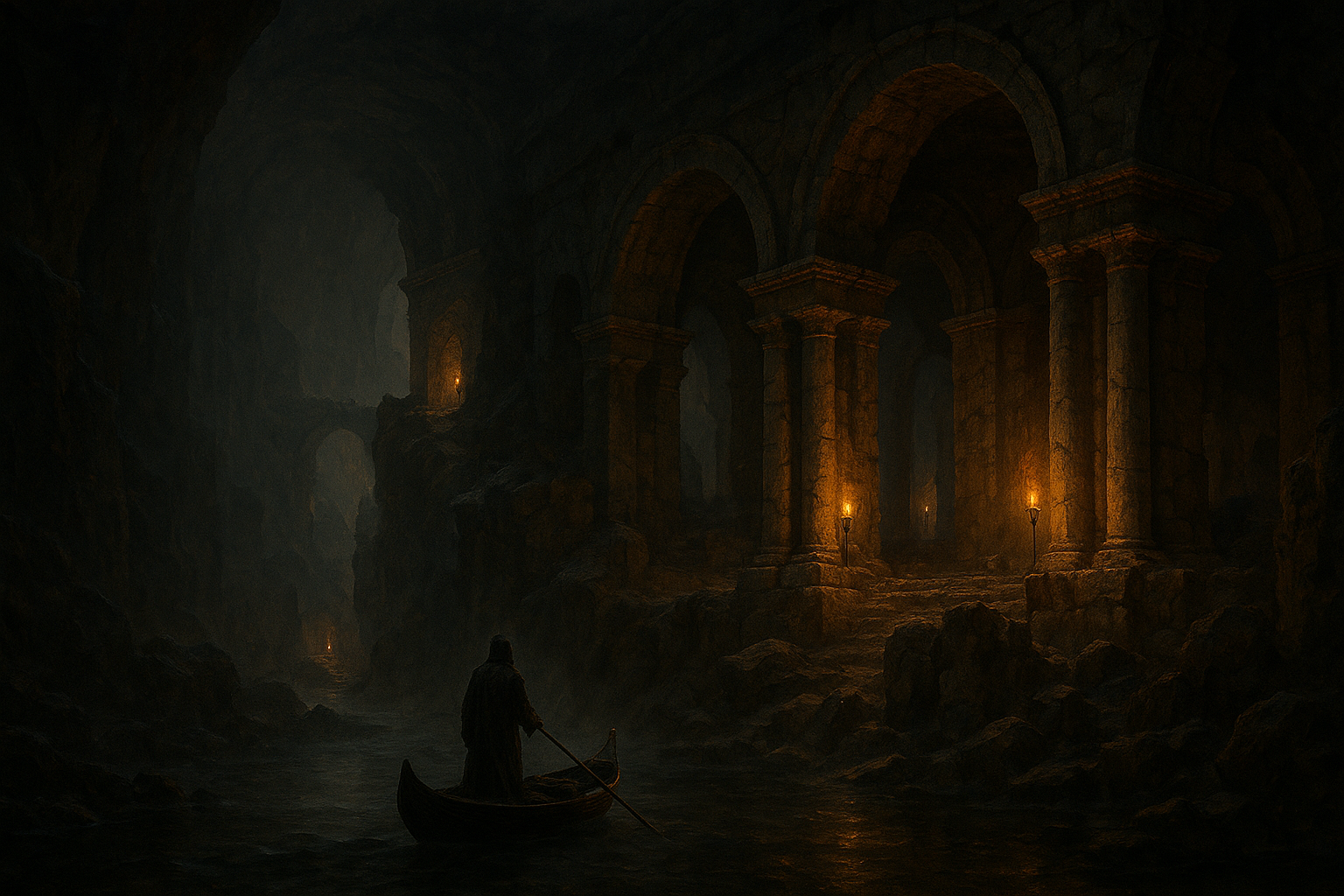
There is a lake in Italy where ancient Romans believed you could walk into the underworld. The water is dark, the volcanic gases killed birds that flew over it, the surrounding forest blocked out the sun. Virgil used it as the door through which Aeneas descended to meet his father and learn the future of Rome.

Cyclopes: One-Eyed Giants of Myth and Forge

Photorealistic painting of a muscular Cyclops holding a wooden club and iron hammer, with a single central eye and a stormy sky behind him.

The ancient world had two entirely different kinds of Cyclops: the divine smiths who forged Jupiter’s thunderbolts under Mount Etna, and the savage shepherd Polyphemus who ate Odysseus’s men. They share a name and a single eye. Almost nothing else.

Pietas: The Roman Virtue of Duty, Devotion, and Obligation

Pietas pours a libation at a Roman altar with sacred fire, family figures, Roman standards, and ancient Rome in the background.

Pietas was the most Roman of virtues — not piety in the modern sense, but the whole network of obligations a person owed to the gods, to their family, and to the state. Aeneas carried his father out of Troy on his back. That was pietas.