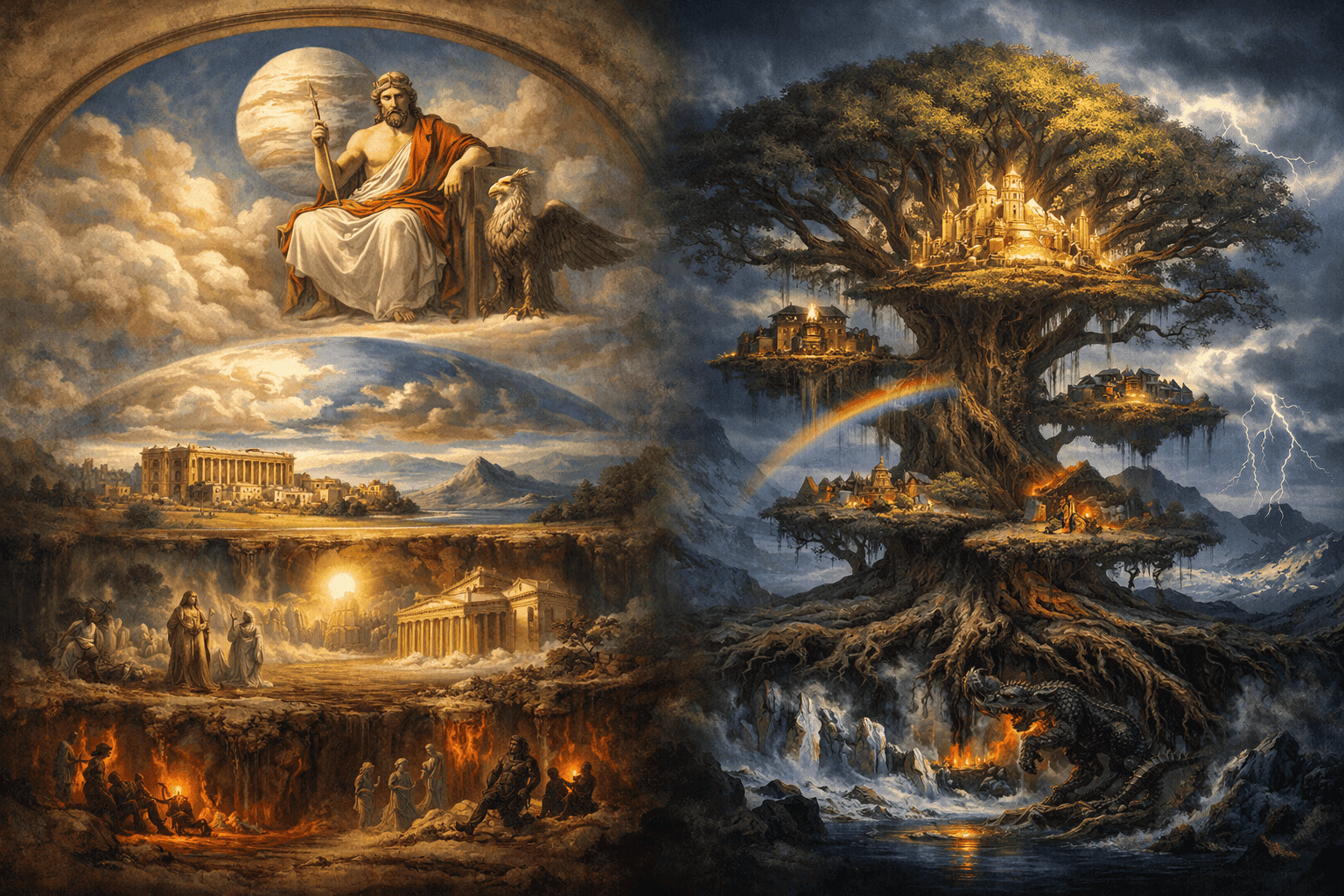
Roman and Norse Cosmology: Two Visions of How the Universe Works

Illustration comparing Roman and Norse cosmology with Jupiter above the Roman world and underworld on one side and the Norse World Tree Yggdrasil connecting the nine realms beneath a stormy sky.

Rome and the Norse world were separated by centuries — but not by ignorance. Tacitus wrote about the Germanic tribes in 98 CE, identifying their gods through Roman equivalents. The planetary week we still use preserves the meeting point: Thursday is both Jupiter’s day and Thor’s day, two thunder gods identified across a cultural divide neither tradition fully crossed.

The Isles of the Blessed: Rome’s Vision of Perfect Paradise

Sunlit landscape of the mythic Isles of the Blessed, with ancient ruins overlooking a calm blue sea and golden meadows.

Most Roman souls went to Elysium, the Asphodel Meadows, or Tartarus. The Isles of the Blessed were for everyone else — the very few whose lives had achieved something the universe recognized as genuinely exceptional. The Romans eventually found real islands in the right direction and named them the Fortunate Isles. They still bear that name today.