

QUICK SUMMARY
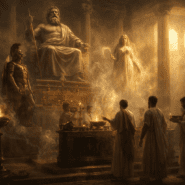
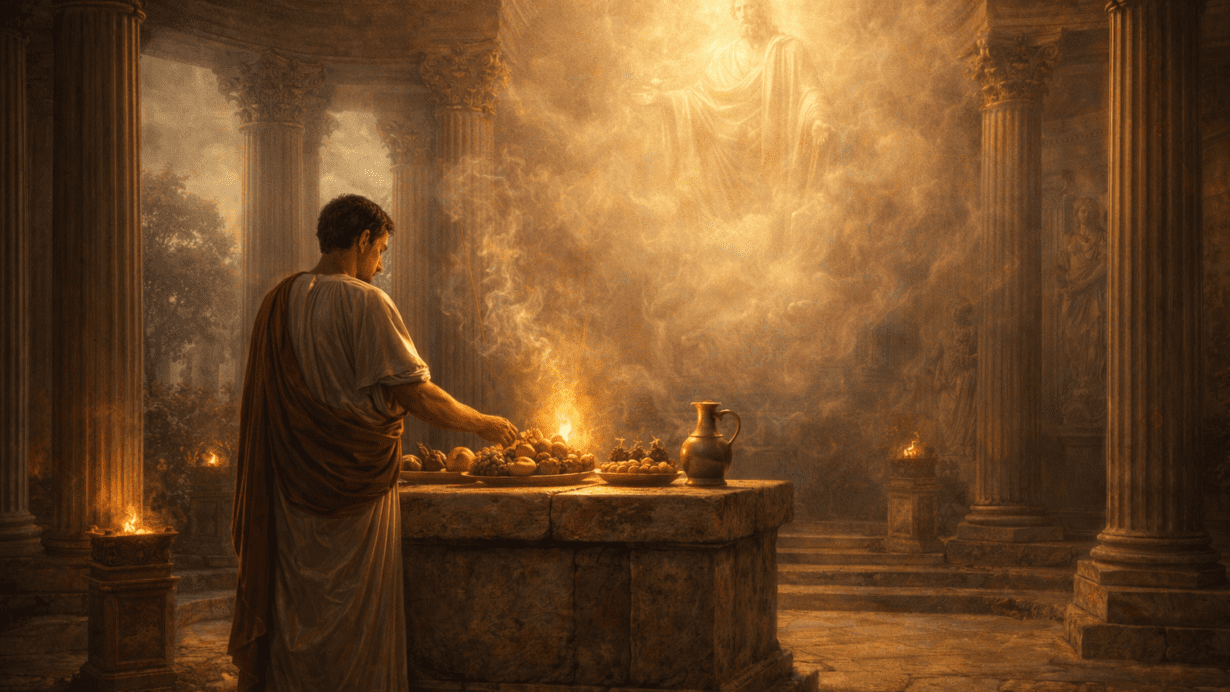
Do ut des (“I give so that you may give”) describes the Roman practice of maintaining a reciprocal relationship with the gods through offerings, rituals, and vows.
Roman religion was not built on blind devotion or abstract faith. It was built on structure, expectation, and exchange. At the center of this system lies a simple but powerful principle: do ut des. Translated as “I give so that you may give,” the phrase captures how the Romans understood their relationship with the divine.
This was not a casual or symbolic idea. It was a working system. Humans offered prayers, sacrifices, and vows, and in return, the gods were expected to respond with protection, success, or favor. The relationship was not based on emotion or belief alone, but on action and response.
To modern readers, this may sound transactional. To the Romans, it was simply how order was maintained.
A Religion Built on Reciprocity
The principle of do ut des reflects a broader Roman worldview in which relationships were defined by mutual obligation. Just as social and political relationships required balance and exchange, so too did the relationship between humans and the gods.
When a Roman made an offering, it was not an act of surrender or submission. It was part of a reciprocal arrangement. The offering acknowledged the power of the god, while also establishing an expectation of return.
This did not mean the gods were controlled or obligated in a strict sense. Rather, it meant that the relationship operated within an understood framework. Proper action created the conditions for divine favor.
Offerings and Sacrifice
At the heart of do ut des were offerings. These could take many forms, from simple gestures to elaborate public sacrifices.
Food, wine, incense, and animals were commonly offered to the gods. The scale of the offering often reflected the importance of the request. A farmer might offer a small portion of his harvest, while the state might conduct large-scale sacrifices before a military campaign.
What mattered was not just the offering itself, but the correctness of the ritual. The words spoken, the gestures performed, and the timing of the ceremony all had to be precise. A mistake could disrupt the exchange, requiring the ritual to be repeated.
This emphasis on precision reinforces the idea that Roman religion was a system, not a matter of improvisation.
Vows and Promises
Another key element of do ut des was the use of vows. A Roman might promise a future offering in exchange for a desired outcome.
For example, a general preparing for battle might vow to build a temple or dedicate a gift if victory were granted. If the request was fulfilled, the vow had to be honored. Failing to do so risked breaking the relationship with the divine.
This forward-looking aspect of do ut des shows how the system extended beyond immediate action. It allowed for negotiation, planning, and long-term commitment.
Public and Private Exchange
The principle of do ut des operated at both the public and private levels of Roman life.
At the state level, rituals were conducted on behalf of the entire community. These ceremonies were believed to secure the favor of the gods for Rome as a whole, influencing everything from military success to agricultural prosperity.
At the same time, individuals practiced do ut des in their daily lives. Household rituals, personal prayers, and small offerings maintained the relationship between the individual and the divine.
This dual structure reflects the integration of religion into all aspects of Roman society. The system of exchange was not limited to temples or festivals. It was part of everyday life.
Not Faith, but Function
One of the most striking aspects of do ut des is how little it depends on personal belief. The system does not require inner conviction or emotional devotion. It requires correct action.
A ritual performed properly was effective regardless of the individual’s internal state. What mattered was that the exchange was carried out according to tradition.
This does not mean that Roman religion lacked meaning or sincerity. Rather, it reflects a different understanding of how humans relate to the divine. The focus is on maintaining order, not expressing belief.
Misunderstanding the System
From a modern perspective, do ut des is sometimes interpreted as a form of bargaining or even manipulation. This interpretation misses the point.
The system was not about controlling the gods, but about maintaining a balanced relationship. Just as social relationships required mutual respect and obligation, so too did the relationship with the divine.
The exchange was not seen as crude or cynical. It was seen as proper, structured, and necessary.
When the Exchange Failed
Because do ut des depended on correct practice, failure in the system could have serious consequences. If a ritual was performed incorrectly, the exchange might be considered invalid.
More broadly, neglecting offerings or failing to fulfill vows could disrupt the relationship with the gods. This disruption might be reflected in misfortune, defeat, or instability.
The response was not to question the system, but to correct the error. Rituals could be repeated, offerings could be made, and balance could be restored.
A Reflection of Roman Order
The principle of do ut des mirrors the broader structure of Roman society. It reflects a world in which relationships are defined by roles, responsibilities, and mutual obligation.
The same logic that governed political alliances, family duties, and social hierarchy also governed religion. The divine world was not separate from human life. It operated according to similar principles of order and exchange.
This consistency is one of the reasons Roman religion was so stable and enduring.
Why Do ut Des Matters
Understanding do ut des is essential for understanding Roman religion as a whole. It explains why rituals were so important, why precision mattered, and why religion was so deeply integrated into daily life.
It also helps explain the structure of the Roman pantheon. The presence of many specialized gods reflects the need for precise interaction within the system of exchange.
Without do ut des, Roman religion can appear rigid or mechanical. With it, the system reveals its logic and coherence.
Final Thoughts
Do ut des is more than a phrase. It is the principle that underlies the entire structure of Roman religious practice.
By framing the relationship between humans and gods as an exchange, the Romans created a system that was clear, structured, and adaptable. It allowed them to engage with the divine in a way that was both practical and meaningful.
Through ritual, offering, and obligation, they maintained a balance that connected the human and divine worlds. That balance was not assumed. It was actively sustained.