


QUICK SUMMARY
In Roman religion, major gods governed broad and essential forces such as war, the sky, and the state, while minor gods oversaw specific functions of daily life, together forming a structured and comprehensive divine system.
At first glance, the distinction between major and minor gods in Roman religion appears simple. Some gods are powerful and widely known, while others are obscure and tied to narrow functions. However, this difference is not merely a matter of importance or popularity. It reflects a deeper structure within Roman belief, one that reveals how the Romans understood the world itself.
Roman religion was built on order, classification, and function. Every god, whether central or obscure, had a role to play within a larger system. The division between major and minor gods was not about worth, but about scope. Together, these two groups formed a complete and interconnected pantheon that governed both the grand forces of existence and the smallest details of everyday life.
The Major Gods: Powers of the Cosmos and the State
Major gods occupied the highest level of the Roman pantheon. These deities governed fundamental aspects of the universe and were closely tied to the identity and stability of Rome.
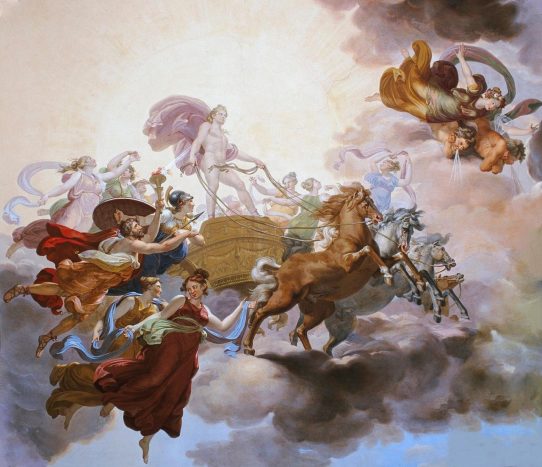
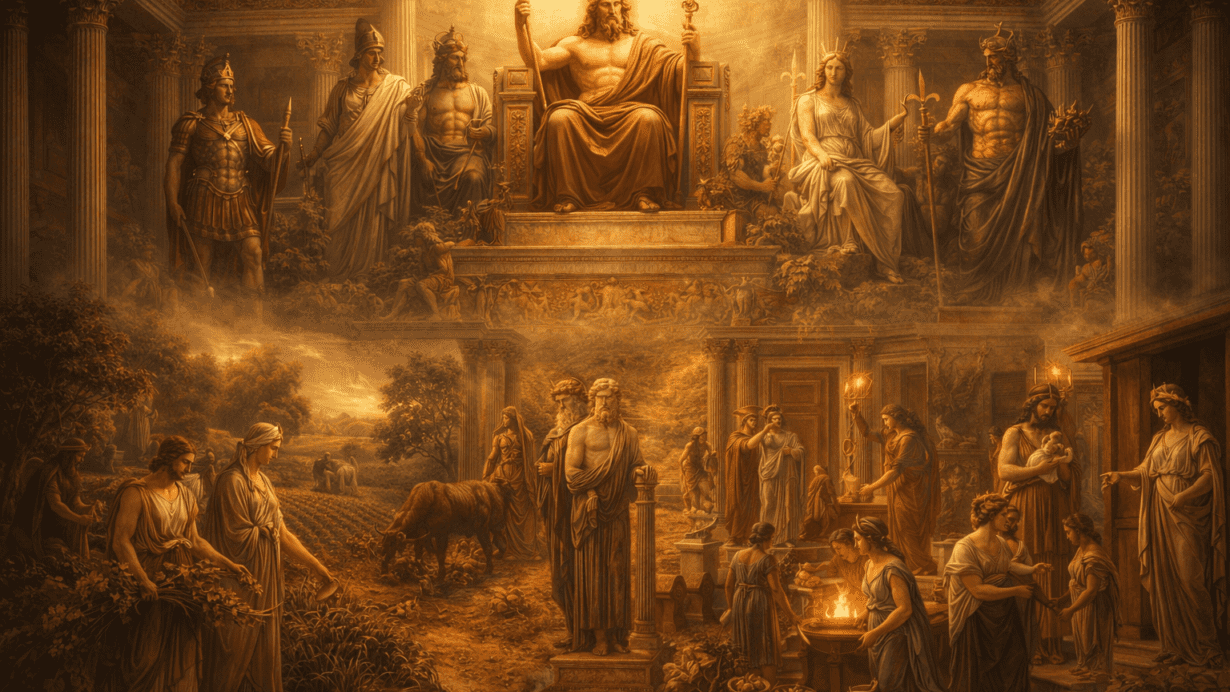
Gods such as Jupiter, Mars, Juno, and Minerva represented forces that extended beyond individual experience. Jupiter ruled the sky and divine authority, Mars embodied war and Roman strength, and Juno protected both women and the state. Their domains were expansive, shaping the destiny of the entire community.
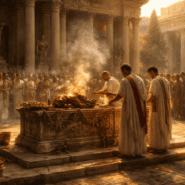
Because of their importance, major gods were central to public religion. They had large temples, formal priesthoods, and state-sponsored festivals. Their worship was not only a matter of personal devotion but a civic responsibility. The well-being of Rome itself was believed to depend on maintaining their favor.
These gods also appear frequently in myth, often interacting with one another and influencing the course of human events. Their narratives reinforce their status as central figures within the pantheon.
The Minor Gods: Guardians of Daily Life
While the major gods governed broad and visible forces, the minor gods oversaw the countless smaller aspects of existence. Roman religion recognized that life was composed of specific actions, places, and transitions, each of which could fall under divine influence.
There were gods for boundaries, doorways, fields, childbirth, and even storage. Figures such as Terminus, Pomona, and Cardea illustrate how detailed this system could become. These deities were not widely known outside their specific functions, but within those functions they were essential.
The presence of minor gods reveals a defining feature of Roman belief: nothing was too small to be governed by the divine. Every part of life, from planting crops to entering a home, could involve interaction with a specific deity.
Their worship was often more local and practical. Unlike the grand temples of the major gods, minor deities were honored through smaller rituals, household practices, or specialized cults. Their importance lay in their precision, not their prominence.
A Difference of Scope, Not Value
It is tempting to interpret “major” and “minor” as a hierarchy of value, but this would misrepresent Roman thinking. The distinction is better understood as a difference in scope.
Major gods governed large, overarching domains that affected the entire state or the natural world. Minor gods governed specific, localized functions that were equally necessary for daily life. One was not inherently more important than the other. Both were required for the system to function.
This perspective reflects the Roman emphasis on order and specialization. Just as society relied on different roles working together, so too did the divine world.
Why the System Worked
The division between major and minor gods allowed Roman religion to be both structured and comprehensive. It provided a framework that could account for every aspect of existence, from the most visible forces to the most subtle transitions.
This system also made Roman religion highly adaptable. As new needs arose or new cultures were encountered, additional deities could be incorporated without disrupting the overall structure. The pantheon could expand while maintaining its internal logic.
The result was a religious system that was both organized and flexible, capable of supporting a growing and changing society.
Interaction Between Major and Minor Gods
Although categorized separately, major and minor gods were not isolated from one another. They existed within the same system and could interact in various ways.
Major gods might oversee broad domains that included the functions of minor deities. For example, a major god associated with agriculture might encompass a range of smaller deities responsible for specific tasks within that domain. This layering of responsibilities reflects the interconnected nature of the pantheon.
At the same time, minor deities could operate independently within their specialized roles. Their presence ensured that no aspect of life was left unaccounted for.
The Roman Mindset Behind the Division
The distinction between major and minor gods reflects a broader Roman mindset. Roman society valued structure, hierarchy, and clearly defined roles. This way of thinking extended naturally into religion.
The pantheon mirrors the organization of Roman life, where authority was concentrated but supported by a network of specialized functions. Just as the state relied on both leaders and administrators, the divine world relied on both major and minor gods.
This parallel between society and religion reinforces the idea that Roman mythology was not separate from daily life. It was an extension of how the Romans understood order itself.
A System of Total Coverage
Perhaps the most striking aspect of this division is how complete it makes the Roman pantheon. There are no gaps. Every force, every action, and every transition can be placed within the system.
The major gods provide the framework, governing the largest and most visible aspects of existence. The minor gods fill in the details, ensuring that even the smallest elements of life are accounted for. Together, they create a comprehensive map of the Roman world.
This total coverage is one of the reasons Roman religion remained so effective and enduring. It offered a way to understand and engage with every part of life, leaving little outside its scope.
Final Thoughts
The distinction between major and minor gods in Roman religion is not simply a matter of scale. It is a reflection of a carefully structured system designed to bring order to both the divine and human worlds.
By dividing the pantheon into broad and specific roles, the Romans created a framework that was both organized and adaptable. Major gods governed the forces that shaped the fate of Rome, while minor gods ensured that daily life remained connected to the divine.
Together, they formed a complete and interconnected system, one that reveals as much about Roman thought as it does about their gods.